Professional communication isn’t just about writing correctly; it’s about conveying reliability, even when you’re not physically present. When your child gets sick, you may feel stressed, overwhelmed, and distracted. Yet, your workplace still relies on your communication to keep things running smoothly. That’s why a calm and professional absence message becomes essential.
Think about it this way: your message is your presence when you’re absent. It tells your team, manager, and clients that you’re still responsible and dependable. A clear, calm message also reduces confusion, prevents unnecessary follow-ups, and helps colleagues plan around your absence. This simple act of communication reflects professionalism more than many people realize.
Experts suggest keeping absence messages concise, clear, and polite. Professional guidelines recommend stating your absence, providing expected return time, and offering alternative contact details when necessary.
When done right, your message communicates three things simultaneously:
Responsibility
Professionalism
Respect
That’s powerful for something that takes less than a minute to write.
Quick Jump
The Growing Need for Family-Friendly Workplace Messaging
Workplace culture is changing. Employers increasingly recognize the importance of supporting working parents. Studies indicate that two in five working parents take time off to care for a sick child, showing just how common this situation is.
This shift means your absence due to child sickness isn’t unusual; but your communication style still matters. Calm, professional messaging strengthens relationships and builds long-term credibility.
Maintaining Professionalism During Personal Emergencies
Professionalism isn’t about hiding personal challenges; it’s about handling them gracefully. A calm absence message shows emotional intelligence. It demonstrates that you’re capable of managing both personal and professional responsibilities.
This kind of communication builds long-term trust with your manager and team. Over time, people recognize your consistency and reliability, even during unexpected situations.
Balancing Transparency and Privacy
Sharing too much can make colleagues uncomfortable. Sharing too little can cause confusion. The sweet spot lies in simple, respectful clarity.
Example:
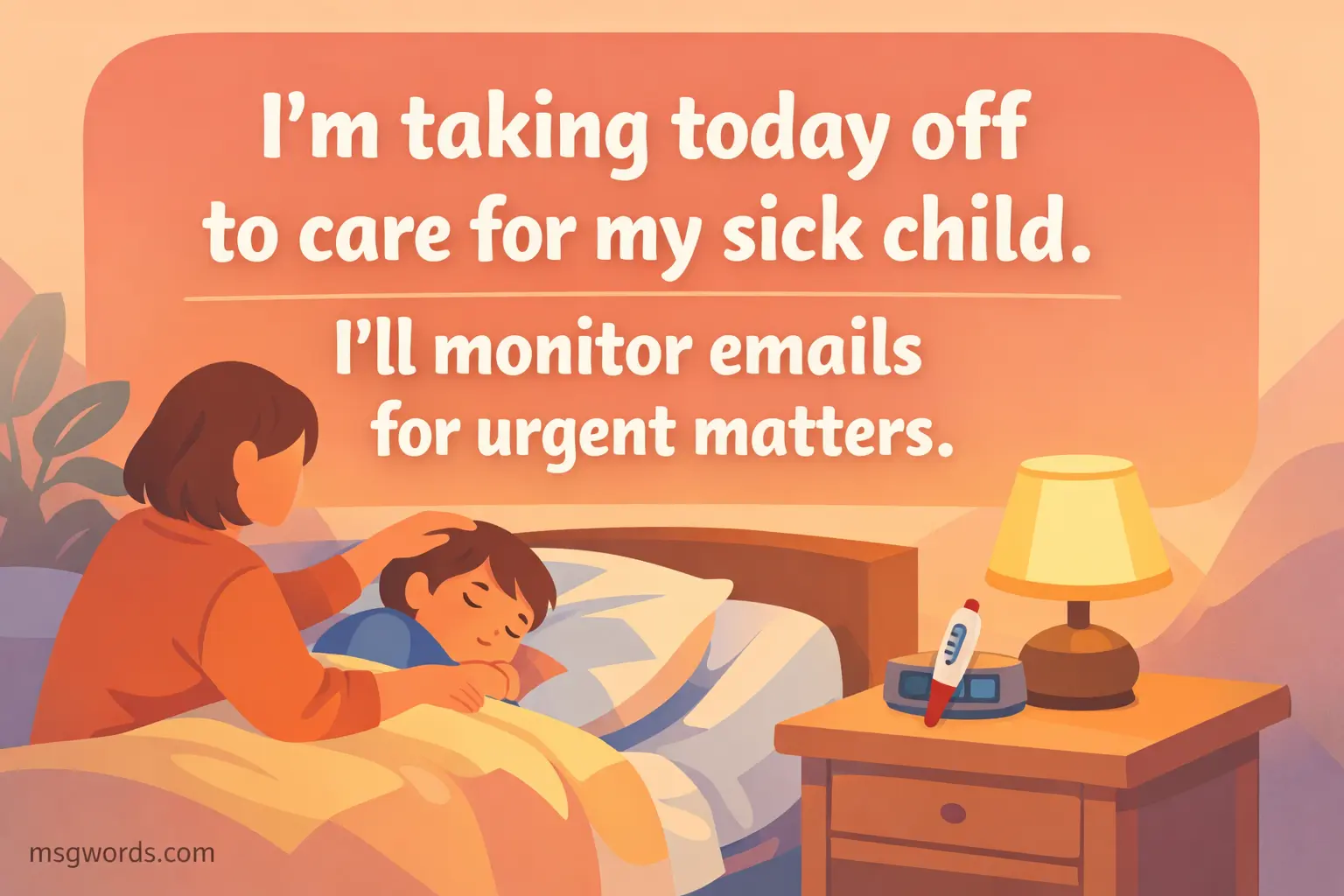
I’m taking today off to care for my sick child. I’ll monitor emails for urgent matters.
Clear Reason Without Over-Explaining
Your team only needs to know you’re unavailable and why. Keep it simple. Avoid medical details or long explanations.
Expected Return Time
Even if you’re unsure, provide an estimate. This helps colleagues plan accordingly.
Offering Work Continuity
This shows responsibility and professionalism. You can mention:
Monitoring emails
Delegating tasks
Updating later
These small details make a big difference.
Reducing Workplace Stress
Stress spreads quickly in professional environments. When one team member is unexpectedly absent, others may feel pressure to compensate. A clear absence message reduces this ripple effect. It provides direction, reassurance, and clarity.
For example, mentioning that you’ll check urgent emails or that a colleague can assist immediately reduces uncertainty. It shows that even while you’re away, you’re still mindful of team responsibilities. This small gesture goes a long way in maintaining harmony.
Calm messaging also prevents unnecessary follow-ups. Without clarity, colleagues might send multiple messages asking questions about your availability. This creates additional stress for both you and your team. A well-crafted absence message eliminates this issue entirely.
Building Trust With Management
Trust is built through consistency. When you communicate professionally during unexpected absences, managers notice. Over time, they develop confidence in your reliability. This trust becomes valuable in many ways; from flexible working arrangements to career growth opportunities.
Managers appreciate employees who communicate proactively. Instead of waiting to be asked, you provide updates voluntarily. This demonstrates accountability and professionalism. Even during emergencies, you show awareness of your responsibilities.
Another benefit is credibility. When you consistently communicate calmly, your occasional absence due to child sickness doesn’t raise concerns. Instead, it’s seen as a normal life event handled responsibly. That’s the ultimate goal; maintaining professionalism without sacrificing personal priorities.
Examples of Professional Absence Messages
Crafting the perfect absence message can feel challenging, especially when you’re stressed. Having ready-to-use examples makes the process easier. Below are different formats tailored to various communication channels.
Short Professional Message
Sometimes simplicity works best. A short message can still sound polished and professional.
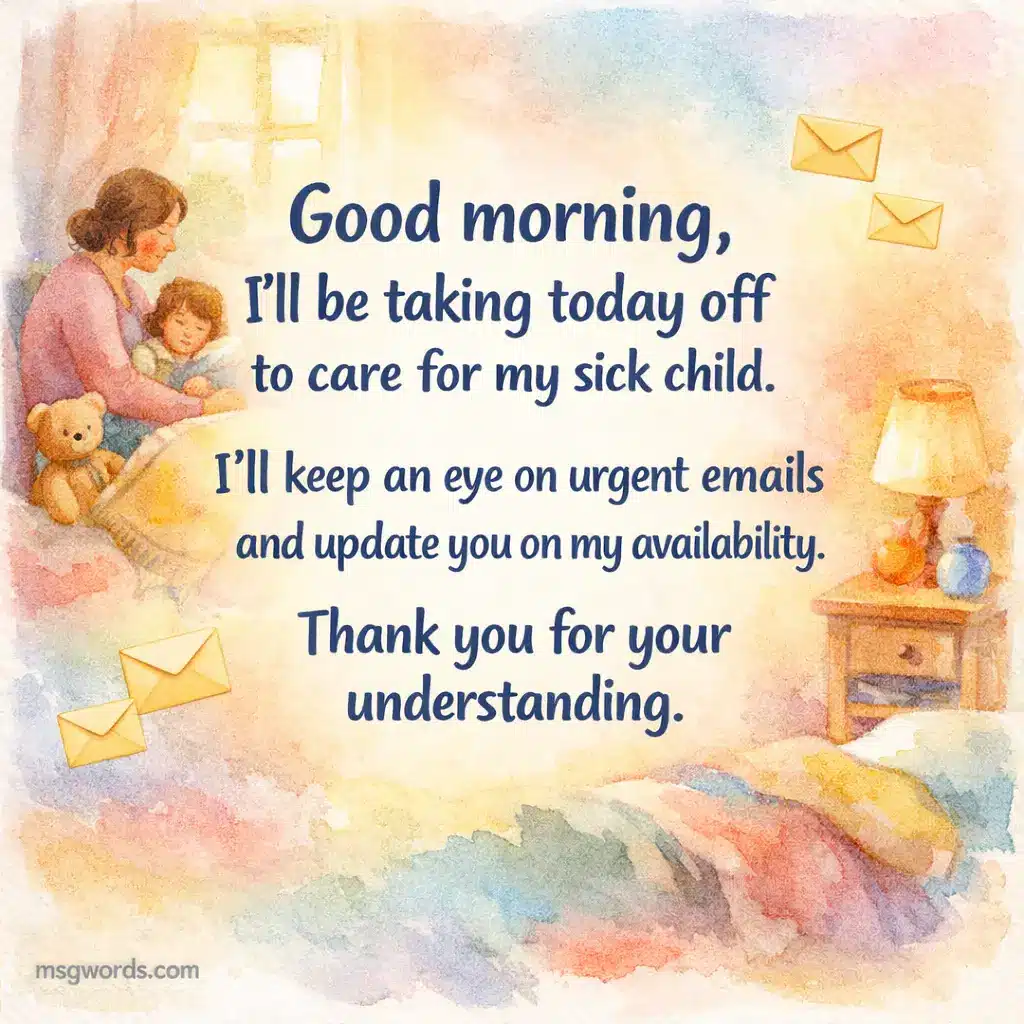
Good morning, I’ll be taking today off to care for my sick child. I’ll keep an eye on urgent emails and update you on my availability. Thank you for your understanding.
This message is calm, clear, and respectful. It provides essential information without unnecessary details.
Email Format Message
Email communication allows slightly more detail while maintaining professionalism.
Subject: Out of Office Today
Hello [Manager Name],
I wanted to inform you that I’ll be taking today off to care for my sick child. I’ll monitor emails periodically and respond to urgent matters as needed. If anything immediate arises, please feel free to contact me.
I’ll keep you updated on my availability.
Thank you for your understanding.
Best regards,
[Your Name]
This format balances professionalism and clarity while maintaining a calm tone.
Slack or Chat Message
Workplace chats require shorter communication. Here’s a professional example:
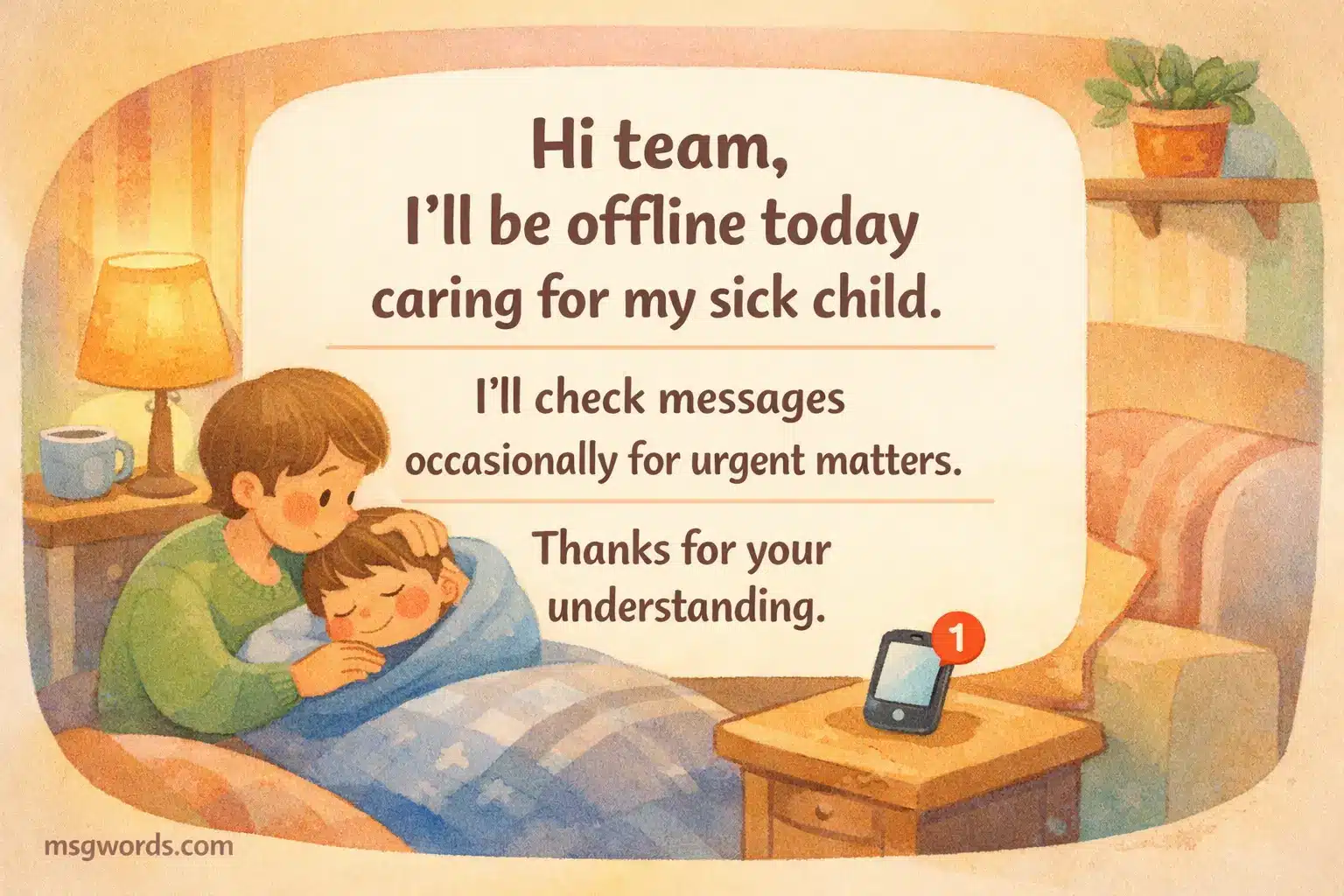
Hi team, I’ll be offline today caring for my sick child. I’ll check messages occasionally for urgent matters. Thanks for your understanding.
Short. Professional. Effective.
Words That Sound Professional
Using calm language helps maintain professionalism:
I’ll be unavailable today
I’ll provide updates
Thank you for your understanding
I’ll monitor urgent matters
These phrases sound confident and composed.
Words to Avoid
Some phrases can unintentionally sound unprofessional or overly emotional:
Sorry, I can’t make it
My kid is really bad
I don’t know when I’ll be back
These phrases create uncertainty and may sound informal.
Minimal Professional Design
Minimal design mirrors clear communication. A clutter-free layout reflects organized thinking. Whether you’re designing a visual message or writing text, simplicity enhances clarity.
Over-Explaining Personal Details
You don’t need to share medical details. Keep it simple and respectful.
Sounding Apologetic or Guilty
Avoid excessive apologies. You’re handling a legitimate situation professionally.
Best Practices for Workplace Communication
Timing and follow-up matter just as much as wording. Sending your message early shows responsibility. Following up later reinforces professionalism.
Following Up Professionally
Once you’re back, send a brief update:
Thank you for your patience. I’m back today and catching up on tasks.
This simple gesture strengthens professional relationships.
Brenno Riggs is a 35-year-old American blogger and editor from Savannah, Georgia. With a background in online publishing and editorial review, he specializes in producing accessible educational content supported by credible sources and practical experience. He believes trustworthy writing should be informative, balanced, and easy to understand. Through his work with msgwords.com, Brenno focuses on creating valuable resources that readers can confidently rely on.